 FREESHIP FOR ALL ORDERS FROM 100 USD
If you’ve ever dreamed of building your own rockets and exploring space, Kerbal Space Program (KSP) is one of the most rewarding games you can play. Unlike traditional space games that focus on combat or scripted missions, KSP challenges players to think like real aerospace engineers. Every successful launch depends on careful planning, physics, and a willingness to learn from failure.
For newcomers, however, Kerbal Space Program can feel overwhelming. Rockets explode on the launch pad, spacecraft tumble out of control, and reaching orbit seems impossible at first. The good news is that every experienced KSP player started the same way. With patience and a solid understanding of the basics, you’ll soon be launching successful missions and exploring the Kerbol System.
Understand the Goal Before Building
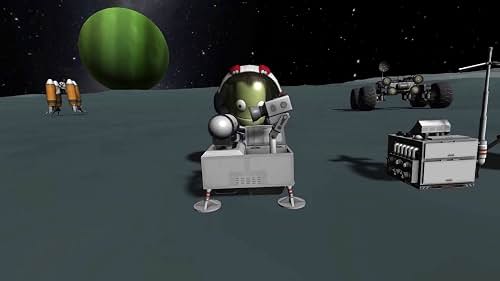
The first mistake many beginners make is jumping straight into rocket construction without understanding the objective. In Kerbal Space Program, every mission has a purpose, whether it’s reaching orbit, landing on the Mun, collecting scientific data, or transporting crew.
Before adding parts randomly, ask yourself a simple question: What is this rocket supposed to accomplish?
A small scientific mission requires a very different design from an interplanetary spacecraft. Defining your mission first helps you build more efficient rockets and avoid unnecessary complexity.
Learn the Basics of Rocket Design
A stable rocket begins with a solid design. Beginners often create rockets that are too tall, too heavy, or poorly balanced, making them difficult to control.
Start with a simple three-stage rocket:
- A powerful first stage to lift off from Kerbin.
- A second stage designed to reach orbit.
- A small upper stage or capsule for completing the mission.
Always keep your rocket symmetrical. Uneven fuel tanks or boosters can cause unwanted spinning during launch.
Equally important is placing enough fins near the bottom of the rocket. These improve aerodynamic stability during the early stages of flight, making launches much smoother.
Master Gravity Turns
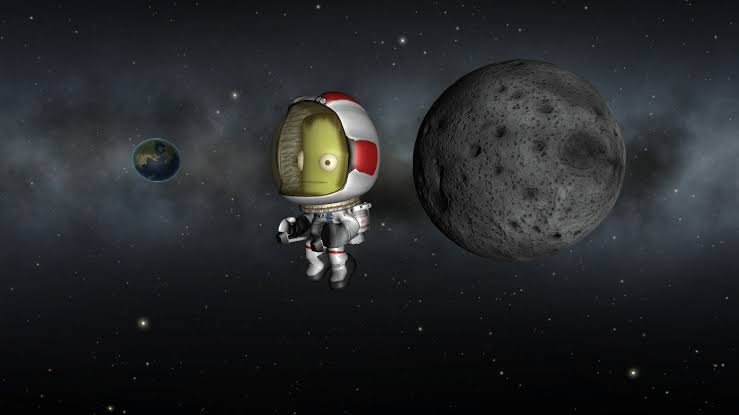
One of the biggest milestones for new players is learning the gravity turn. Many beginners try to fly straight upward until they run out of fuel, but that’s not how rockets reach orbit.
Instead, begin tilting your rocket slightly—usually around 10 degrees—after reaching approximately 100 meters per second. As altitude increases, gradually pitch toward the horizon.
This smooth curve allows your spacecraft to build horizontal velocity, which is essential for entering orbit. Once you understand gravity turns, reaching space becomes dramatically easier.
Pay Attention to Delta-v
Delta-v is one of the most important concepts in Kerbal Space Program. It measures how much change in velocity your spacecraft can achieve, essentially determining how far it can travel.
Beginners don’t need to memorize every number, but understanding Delta-v maps helps enormously when planning missions.
For example:
- Low Kerbin Orbit requires roughly 3,400 m/s.
- Landing on the Mun and returning home requires considerably more.
- Interplanetary travel demands careful fuel budgeting.
Building with Delta-v in mind prevents missions from ending because of empty fuel tanks halfway through the journey.
Don’t Ignore Science Mode
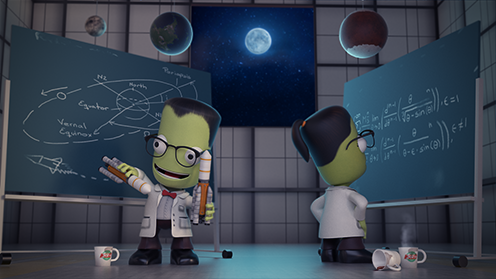
While Sandbox Mode gives unlimited access to every part, many new players learn faster by starting in Science Mode.
Science Mode gradually unlocks new technology through experiments and discoveries. This slower progression introduces mechanics one step at a time, preventing beginners from becoming overwhelmed by hundreds of available parts.
Running experiments with Mystery Goo, Science Jr., and crew reports not only advances your space program but also teaches how exploration works in KSP.
Learn From Every Failure
Failure is an essential part of Kerbal Space Program.
Your first rocket may explode.
Your second might flip over.
Your third could miss orbit entirely.
That’s perfectly normal.
Each unsuccessful mission teaches valuable lessons about aerodynamics, thrust-to-weight ratio, staging, or fuel efficiency. Instead of becoming frustrated, review what happened and adjust your design. Every experienced KSP player has watched dozens—if not hundreds—of spectacular explosions before achieving success.
Start With Simple Missions
It’s tempting to dream about visiting distant planets immediately, but patience pays off.
A recommended progression for beginners is:
- Launch successfully.
- Reach space.
- Achieve stable orbit.
- Return safely to Kerbin.
- Orbit the Mun.
- Land on the Mun.
- Return home safely.
Completing these milestones builds confidence while teaching essential mechanics that will be useful throughout the game.
Use Maneuver Nodes
Once you can reach orbit consistently, it’s time to learn maneuver nodes.
These planning tools allow you to simulate burns before actually performing them. They make orbital transfers, rendezvous missions, and interplanetary travel much easier.
Although maneuver nodes can seem confusing initially, they become one of the most powerful tools in the game. Spending time practicing them will dramatically improve your mission planning skills.
Enjoy the Creativity of the Sandbox
One reason Kerbal Space Program has remained popular for so many years is its incredible freedom. There is rarely only one correct solution to a problem.
Some players build realistic space agencies inspired by NASA.
Others create reusable rockets, enormous space stations, or even walking robotic vehicles.
The game rewards experimentation just as much as efficiency, allowing every player to develop their own engineering style.
Why Kerbal Space Program Is Worth Learning
Despite its steep learning curve, Kerbal Space Program offers one of the most satisfying progression systems in gaming. Every achievement feels earned because it comes from understanding real scientific principles rather than simply leveling up.
As your knowledge grows, missions that once seemed impossible become routine. Eventually, you’ll find yourself planning complex orbital rendezvous, constructing interplanetary spacecraft, and exploring distant worlds with confidence.
That sense of genuine accomplishment is what keeps players returning to KSP year after year.
Final Thoughts
Kerbal Space Program may seem intimidating at first, but every failed launch is simply another step toward becoming a better engineer. By starting with simple missions, learning the fundamentals of rocket design, and embracing experimentation, you’ll gradually unlock the incredible depth that has made KSP one of the most beloved space simulation games ever created.
👉 If you’re ready to show your passion beyond the launch pad, explore Kerbal Space Program–inspired apparel, accessories, and collectibles at kerbalspaceprogram.store. It’s a great way to celebrate your journey through the Kerbol System and bring a piece of your favorite space adventure into everyday life.
