 FREESHIP FOR ALL ORDERS FROM 100 USD
Few space simulation games reward creativity and problem-solving as much as Kerbal Space Program (KSP). Rather than simply piloting spacecraft, players are challenged to become engineers, scientists, and mission planners. Every launch is an experiment, every failure is a lesson, and every successful landing feels genuinely earned. While the game offers nearly endless possibilities, understanding a few core strategies can dramatically improve your progress, whether you’re just building your first rocket or planning an ambitious interplanetary expedition.
Here are some of the most effective strategies that every Kerbal Space Program player should know.
Build Simple Before Building Big
One of the most common mistakes new players make is trying to build enormous rockets immediately. While adding more engines and fuel tanks may seem like the easiest way to reach space, larger rockets often become unstable, inefficient, and difficult to control.
Instead, start with small, lightweight launch vehicles designed for specific missions. A rocket built only to reach orbit requires far fewer parts than one intended for a journey to another planet. Keeping designs simple also makes it much easier to identify problems when something goes wrong.
As your understanding of aerodynamics, staging, and fuel efficiency grows, you can gradually expand your spacecraft into more advanced designs.
Learn the Importance of Delta-v
If there is one concept that separates beginners from experienced KSP players, it is Delta-v. Rather than measuring how fast a rocket travels, Delta-v represents the amount of velocity change a spacecraft can achieve throughout its mission.
Planning missions around Delta-v budgets is essential. Every destination—from low Kerbin orbit to the Mun, Minmus, Duna, or Jool—requires a certain amount of Delta-v to reach safely and return.
Using the in-game engineer’s report or community Delta-v maps allows players to design spacecraft that carry enough fuel without adding unnecessary weight. Efficient planning often leads to more successful missions than simply building larger rockets.
Master Gravity Turns
A successful launch is about more than reaching high altitude. One of the most valuable techniques in Kerbal Space Program is the gravity turn, a gradual maneuver that tilts the rocket toward the horizon during ascent.
Instead of flying straight upward until leaving the atmosphere, experienced players begin pitching slightly eastward shortly after liftoff. This allows gravity to naturally guide the rocket into orbit while conserving fuel.
Although mastering the gravity turn takes practice, it quickly becomes one of the biggest improvements any player can make to launch efficiency.
Design Rockets with Stability in Mind
Rocket stability is just as important as engine power. A powerful launch vehicle can easily fail if its center of mass and center of aerodynamic pressure are poorly balanced.
Adding fins near the bottom of the rocket improves stability during atmospheric flight. Fairings reduce drag around payloads, while properly placed struts help prevent large rockets from flexing excessively.
Before every launch, check that your rocket remains balanced throughout each stage of flight. A stable rocket not only flies better but also requires fewer steering corrections, saving valuable fuel.
Use Staging Efficiently
Staging is one of KSP’s defining mechanics. Separating empty fuel tanks and boosters reduces weight, allowing the remaining stages to accelerate more efficiently.
Instead of building a single massive rocket, divide it into specialized sections. Boosters handle liftoff, the main stage reaches orbit, and upper stages complete transfers or landings.
Well-designed staging often makes the difference between barely reaching orbit and having enough fuel to complete an entire mission.
Plan Every Mission Before Launch
Successful space programs rely on preparation. Before pressing the launch button, define the mission objective.
Ask yourself questions such as:
- Is this mission reaching orbit, landing, or returning?
- How much Delta-v will be required?
- Does the spacecraft include enough electrical power?
- Are parachutes or landing legs necessary?
- Is there sufficient communication equipment if using advanced game settings?
Careful planning reduces unnecessary redesigns and increases mission success.
Don’t Fear Failure
One reason Kerbal Space Program has remained so beloved is its attitude toward failure. Explosions, crashes, and unexpected disasters are not punishments—they’re part of the learning process.
Many experienced players have destroyed hundreds of rockets before successfully landing on distant worlds. Every failed launch teaches valuable lessons about engineering, orbital mechanics, or spacecraft design.
Instead of restarting in frustration, analyze what happened and improve the next design. This engineering mindset is one of KSP’s greatest strengths.
Take Advantage of Space Stations and Reusable Designs
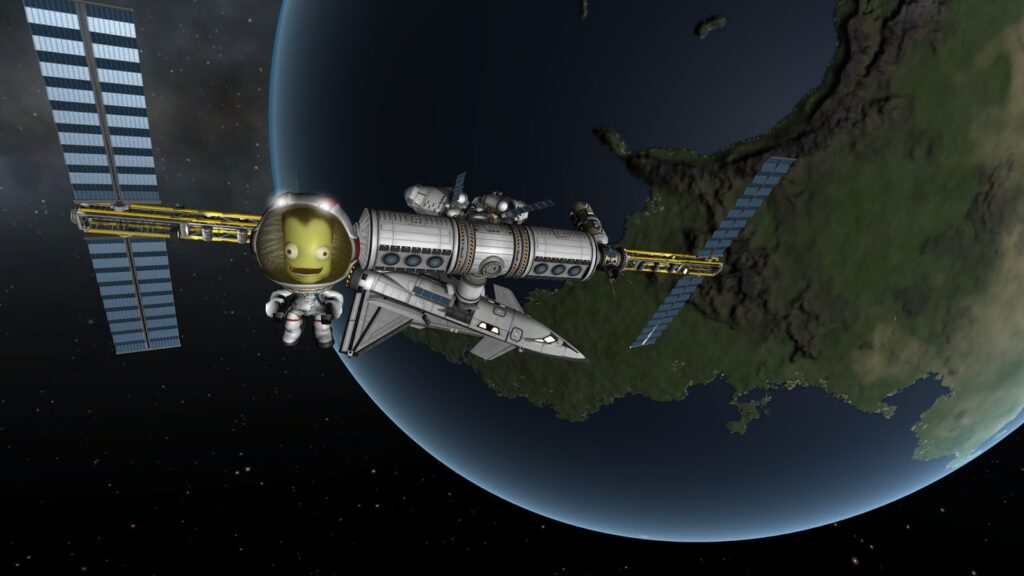
As players progress, building permanent infrastructure becomes increasingly valuable. Space stations can serve as refueling hubs, research platforms, or assembly points for larger interplanetary missions.
Similarly, reusable launch vehicles reduce construction time. Saving successful rocket designs allows players to adapt proven spacecraft instead of starting from scratch for every mission.
Over time, building a reliable fleet becomes far more efficient than designing entirely new rockets for each objective.
Experiment with Different Mission Styles
One of the greatest joys of Kerbal Space Program is its freedom. After mastering basic orbital missions, challenge yourself with new objectives.
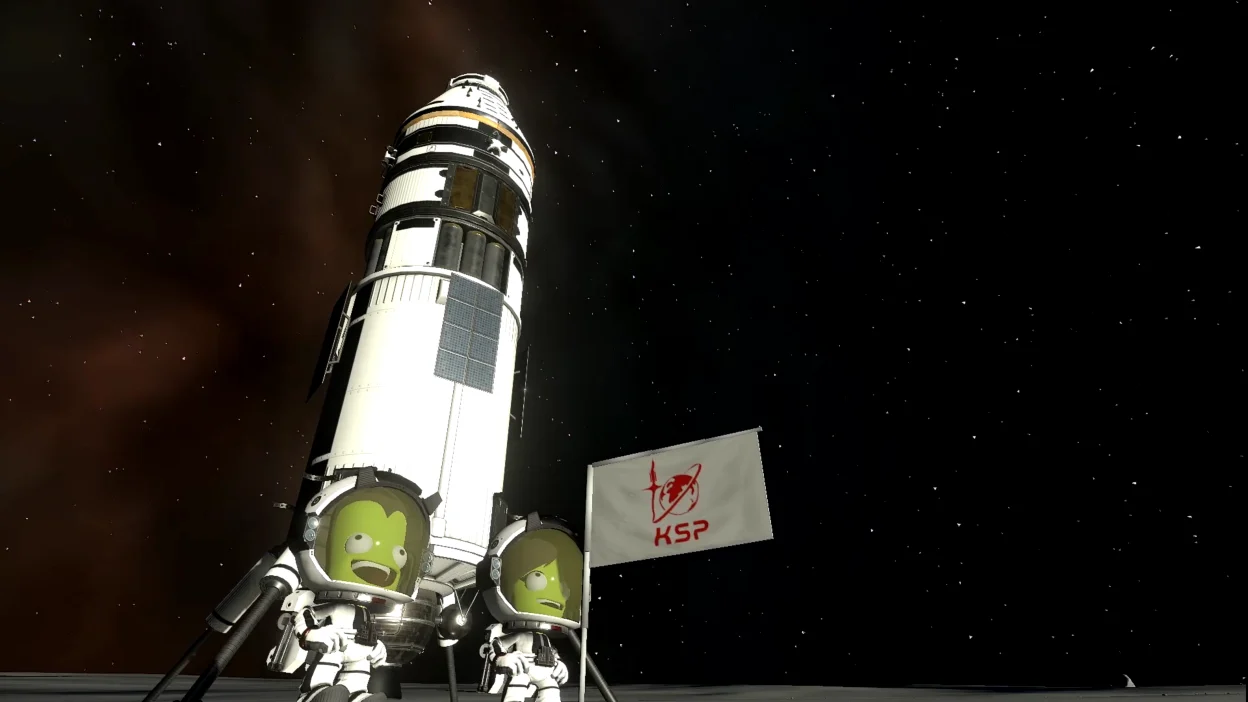
Try building a fully reusable rocket, establish a colony on another celestial body, perform gravity assists around planets, rescue stranded Kerbals, or recreate famous historical space missions. Each new challenge develops different engineering skills and keeps the game fresh even after hundreds of hours.
Because there is rarely a single “correct” solution, experimentation often leads to the most satisfying discoveries.
Final Thoughts
The best Kerbal Space Program strategies are built on patience, curiosity, and continuous improvement. Every successful mission begins with thoughtful planning, smart engineering, and the willingness to learn from failure. Whether you’re launching your very first rocket or preparing an expedition across the Kerbol system, each achievement represents skills you’ve earned through experimentation and persistence.
👉If you’re passionate about Kerbal Space Program and want to celebrate your love for space exploration beyond the screen, explore Kerbal Space Program–inspired merchandise, apparel, and collectibles at kerbalspaceprogram.store. It’s a great way to show your enthusiasm for one of the most rewarding and educational space simulation games ever created.
